Conductivity Level Switch Working Principle: A Complete Guide to Reliable Liquid Level Detection
Introduction
In many industries, controlling the liquid level inside tanks is critical for smooth operations. If the level rises too high, it can cause overflow, product loss, or even equipment damage. If the level drops too low, pumps may run dry and processes can stop completely. These problems lead to downtime, safety risks, and increased maintenance costs.
This is where understanding the conductivity level switch working principle becomes important. A conductivity level switch is a reliable device used to detect the presence of conductive liquids such as water, chemicals, and wastewater. It works by sensing electrical conductivity through electrodes placed inside a tank.
Because of its simple design, fast response, and accurate detection, the conductivity level switch is widely used in industries such as water treatment, food processing, chemical manufacturing, and pharmaceuticals. In this guide, we will explain how conductivity level switches work, their components, types, and industrial applications.
What is a Conductivity Level Switch?
A conductivity level switch is an industrial device used to detect the presence or absence of liquid inside a tank, reservoir, or pipeline.
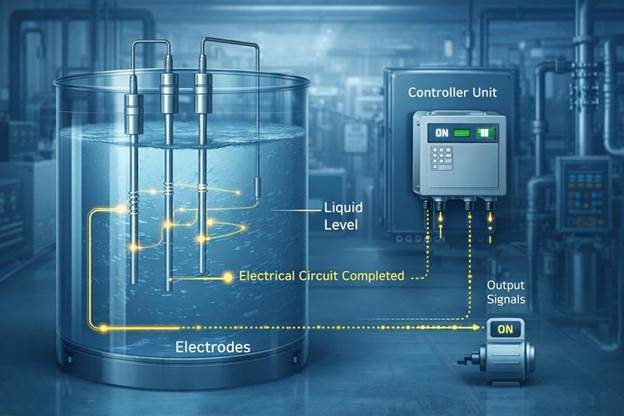
It works by using electrodes that measure the electrical conductivity of a liquid. When a conductive liquid touches the electrode, it completes an electrical circuit. The switch then sends a signal that can activate alarms, control pumps, or automate processes.
Unlike continuous level sensors that measure exact liquid height, a level switch is used to detect specific level points such as:
● High level
● Low level
● Pump start level
●
Pump stop level
Because of its simple working mechanism and durability, conductivity level switches are widely used for reliable liquid level detection in industrial environments.
Basic Principle of Conductivity
Electrical conductivity is the ability of a liquid to allow electric current to pass through it. Liquids such as water, chemicals, and wastewater contain dissolved ions that carry electrical charge. When electrodes are placed inside these liquids, they create a conductive path that allows current to flow. This principle is used by conductivity level switches to detect the presence of liquid.
Conductivity Level Switch Working Principle
The conductivity level switch working principle is based on detecting electrical conductivity between an electrode and a reference point such as another electrode or the tank wall.
When a conductive liquid touches the electrode, it completes an electrical circuit that is detected by the controller.
Here is a step-by-step explanation of how it works:
Electrodes are installed inside a tank: One or more metal electrodes are installed at specific level points inside the tank.
No liquid contact means open circuit: When the liquid level is below the electrode, the circuit remains open and no electrical signal is detected.
Liquid touches the electrode: When the liquid level rises and contacts the electrode, it creates a conductive path.
Circuit is completed: The conductive liquid allows a small sensing current to flow between the electrode and the reference point.
Switch output is triggered: The controller detects the current flow and activates a switching output.
This signal can be used to:
● Start or stop pumps
● Trigger alarms
● Control industrial processes
● Prevent tank overflow
Because there are no moving parts, conductivity level switches provide fast and reliable liquid level detection in industrial systems.
Key Components of a Conductivity Level Switch System
A conductivity level switch system includes several important components that work together for accurate detection.
Electrodes (Level Probes)
Electrodes are the sensing elements that detect the liquid level.
Common electrode materials include:
● Stainless steel
● Titanium
●
Graphite
These materials are corrosion resistant and suitable for different industrial liquids.
Conductive Liquid
For the system to work, the liquid must be electrically conductive.
Examples of conductive liquids include:
● Water
● Wastewater
● Chemical solutions
●
Beverage liquids
Liquids with very low conductivity may require other sensing technologies.
Controller or Relay Unit
The controller receives signals from the electrodes and determines whether the circuit is open or closed.
It then sends the appropriate control signal to the system.
Output System
The output system connects the level switch to industrial equipment such as:
● Pumps
● Alarms
● Valves
●
Automation systems
This allows automatic control of liquid levels.
Types of Conductivity Level Switches
Conductivity level switches are available in different configurations depending on the monitoring requirement.
Single Electrode Level Switch
Used for simple level detection such as pump start or stop.
Multi-Electrode Level Switch
Multiple electrodes allow detection of several liquid levels inside a tank.
Single Channel Conductivity Level Switch
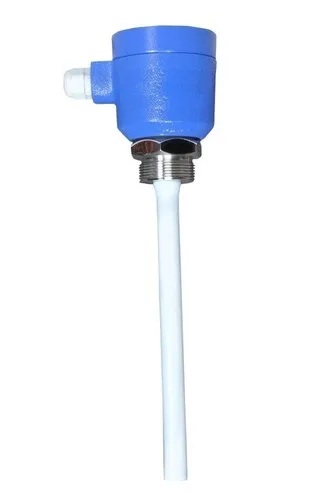
A 1 Channel Conductivity Level Switch is commonly used for detecting a single level point inside a tank. It operates using electrodes that detect the presence or absence of conductive liquid and trigger a switching signal when the liquid reaches the electrode level.
These switches are widely used for applications such as pump control, overflow protection, and basic liquid level monitoring in industrial tanks.
Multi Channel Conductivity Level Switch
Used when multiple levels must be monitored simultaneously.
For example:
● 2 Channel switches detect high and low levels.
●
4 Channel switches
monitor multiple level points in complex systems.
Electrode Type Level Switch Working Principle
An electrode type level switch operates using conductive probes placed inside the tank.
Each electrode represents a specific level point. When the liquid touches the electrode, it completes an electrical circuit and triggers a signal.
This type of switch is highly reliable because it has:
● No moving parts
● Simple electronic design
●
Fast response time
Electrode level switches are commonly used for water level monitoring and industrial liquid detection.
Applications of Conductivity Level Switches
Conductivity level switches are used in many industries where conductive liquids must be monitored.
Water Treatment Plants
Used to monitor water levels in treatment tanks and reservoirs.
Chemical Processing
Ensures safe monitoring of chemical storage tanks.
Food and Beverage Industry
Detects liquid levels in mixing tanks and storage containers.
Pharmaceutical Manufacturing
Used for accurate level monitoring during pharmaceutical production.
Wastewater Treatment
Helps detect water and sludge levels in wastewater treatment systems.
Advantages of Conductivity Level Switches
Conductivity level switches provide several advantages in industrial environments.
Key benefits include:
● Simple and reliable working principle
● Fast response time
● Low maintenance requirements
● Cost-effective installation
● Suitable for harsh industrial environments
●
Accurate detection of conductive liquids
These benefits make them a practical solution for industrial liquid level monitoring systems.
: Factors to Consider When Choosing a Conductivity Level Switch
Selecting the right level switch depends on several factors.
Important considerations include:
● Liquid conductivity level
● Tank design and installation location
● Temperature and pressure conditions
● Electrode material compatibility
●
Integration with control systems
Choosing the correct device ensures reliable performance and long service life.
Conclusion
Understanding the conductivity level switch working principle helps industries choose reliable solutions for liquid level monitoring. By using electrodes to detect electrical conductivity in liquids, these switches provide fast and accurate detection of level conditions.
Because of their simple design, durability, and low maintenance requirements, conductivity level switches are widely used in industries such as water treatment, chemical processing, food production, and pharmaceutical manufacturing.
For applications that require dependable monitoring of conductive liquids, conductivity level switches offer a practical and efficient solution for maintaining safe and controlled operations.
Frequently Asked Questions
What is the working principle of a conductive level switch?
A conductive level switch detects liquid levels by measuring electrical conductivity between electrodes. When the liquid touches the electrode, it completes the circuit and triggers a switching signal.
How does a conductivity level sensor work?
A conductivity level sensor uses electrodes placed at specific levels inside a tank. When conductive liquid contacts the electrodes, current flows through the liquid and activates the sensor output.
What is the basic principle of conductivity?
Conductivity is the ability of a material to allow electric current to pass through it. In liquids, conductivity occurs when dissolved ions carry electrical charge.
What is the SI unit for conductivity?
The SI unit of electrical conductivity is Siemens per meter (S/m).
What are the different types of conductivity?
Electrical conductivity can occur in solids, liquids, and electrolytes. In industrial applications, conductivity is mainly measured in conductive liquids such as water and chemical solutions.